
Have you ever stood in front of a gorgeous claw machine, dropped in a few coins… and still walked away with nothing?
Why can some people win in one try while others fail ten times in a row?
Today’s claw machines are no longer just simple cranes. There are mini machines for cafés, giant showpiece cranes in malls, skill-based UFO catchers, smart networked machines and more. For players, a lot of machines feel either too hard and not fun, or too easy and boring. For operators, it’s easy to buy a cabinet that looks great, but doesn’t really earn back its cost.
This guide walks you through the main types of claw machines—from size and claw design to game mechanics, scenarios, tech features and prize strategies—so you can:
Understand what you’re actually playing or operating
Match the right machine to the right place and audience
Make claw machines both enjoyable and profitable
I. Basic Claw Machine Types: Build the “Skeleton” First
Before talking about gameplay, operations and purchasing, it helps to start with two basic dimensions:
Size / floor space
Structure / claw design / gameplay mechanics
Once this “skeleton” is clear, you won’t be fooled by flashy cabinets and marketing lines. You’ll quickly see whether a machine fits your venue, budget and target audience.
1. By Size / Floor Space
(1) Mini Claw Machines (Small Form Factor)
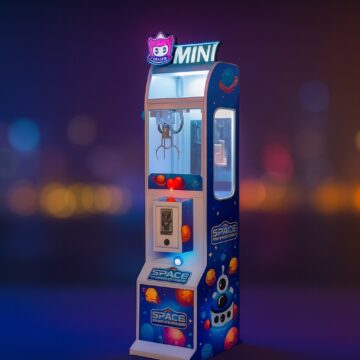
Features: Very compact bodies, some are even countertop machines. They usually take up less than 1 m² of space.
Best for: Cafés, milk tea shops, snack bars, convenience stores, kids’ restaurants, small play corners and other places with limited space but decent foot traffic.
Advantages:
Low upfront investment; cabinet and renovation costs are both small.
Easy to maintain – staff can look after the machine in passing.
Hardly takes any space; works well as a small “grab-and-go” attraction and entertainment point.
For store owners trying claw machines for the first time, mini machines are the most friendly way to test the waters.
(2) Standard / Medium Claw Machines
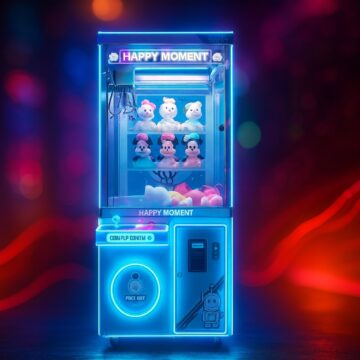
Features: One size up from mini machines. This is the most common size in malls, cinemas and arcades. The cabinet is eye-catching but not overwhelming.
Best for: Shopping malls, cinema lobbies, shopping centers, small arcades, KTVs, large F&B venues and similar locations.
Advantages:
Can hold more and larger prizes.
Strikes a good balance between visibility and walk-by traffic; appeals to most players.
Investment vs. return is balanced – this is the main money-making type in many venues.
If you only plan to focus on one type of machine, a standard / medium claw machine is almost always a safe bet.
(3) Large / Giant / Deluxe Claw Machines
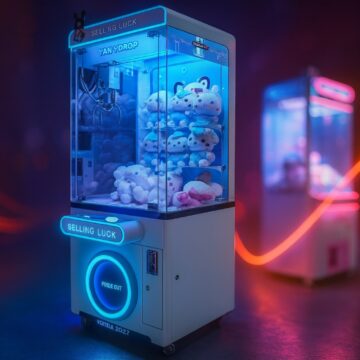
Features: Big cabinets that occupy substantial floor space, often with strong lighting, themed shells or decorations that can be seen from far away. Suitable for oversized plush, premium gifts and eye-catching setups.
Best for: Main corridors in large malls, play center hubs, theme parks, trade shows, event venues or the key visual position in a big arcade.
Advantages:
Strong visual impact – a natural “photo spot” and traffic magnet.
Works with higher-value, large-size prizes and supports higher ticket prices.
Significantly upgrades the venue’s atmosphere and brand image.
This type comes with higher purchasing and maintenance costs and is best for high-traffic locations targeting mid- to high-spending customers.
2. By Structure / Claw Design / Gameplay Mechanics
This category breaks down into three parts:
Claw design
Gameplay mechanics
Special structures and play styles
2.1 By Claw Design

(1) Classic Three-Prong Claw
Structure: Three claw arms form a triangular grip – this is the “traditional claw machine” most people recognize.
Best for prizes: Plush toys, small toys, small gift boxes and other light to medium-weight items.
Best for players: Beginners, families, kids or casual shoppers who just want a few quick plays.
Advantages: Simple operation, easy to understand, easy to maintain – the most reliable all-round choice.
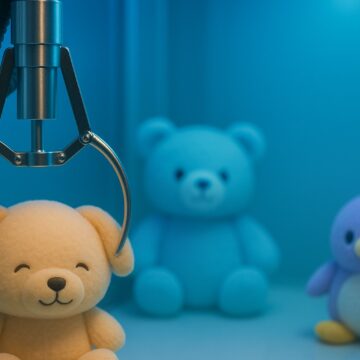
(2) Two-Prong / UFO-Style Claw
Structure: Only two claw arms. Often seen on Japanese-style “UFO catcher” or other skill-based machines. Success depends more on angle and center of gravity.
Best for prizes: Bigger or heavier plush, box-shaped toys and neatly shaped gift boxes.
Player experience: More difficult and more reliant on observation and calculation – attractive to players who like to study technique and are willing to try multiple times.

(3) Magnetic Claw
Structure: The claw is equipped with magnets that “grab” prizes by magnetism instead of clamping.
Best for prizes: Toys with metal pieces, metal key tags, metal gift plates or cards.
Advantages: Novel gameplay; prize displays are often more orderly and visually striking, making these machines great for themed events or branded gifts.
In short: three-prong = general-purpose; two-prong = skill-focused; magnetic claws = creative or themed machines.
Operators can mix different claw types based on prize type and player profile.
2.2 By Gameplay Mechanics
Even though they all look like “claw machines,” some cabinets rely more on luck, some more on technique, and some are almost pure physics games based on pushing, pulling or cutting.
(1) Probability-Based Claw Machines
Features: The claw strength is not the same every time. The machine internally sets a ratio of “strong grabs” to “weak grabs.” Most of the time, the claw is weaker; only occasionally it becomes noticeably strong.
Effect: Players feel that “once in a while the claw suddenly grips very hard,” which creates a lottery-like thrill.
Pros for operators: They can control the overall payout rate via parameters and better manage prize cost.
Risk: If configured too “stingy,” players feel the machine is “impossible to win” and quickly lose interest.
(2) Fixed-Strength Claw Machines
Features: The claw strength is basically the same each play. The machine does not deliberately “weaken” or “boost” the claw.
Effect: Success depends largely on the player’s judgment and control – position, angle, prize choice and timing.
Best for: Venues that want a clear sense of fairness and skill, or those targeting experienced players and challenge seekers.
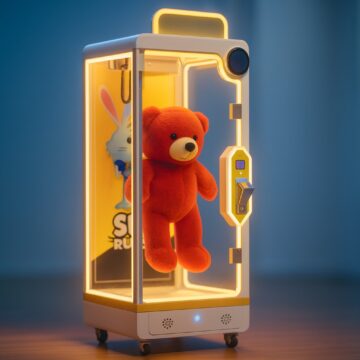
(3) Skill-Based Push / Pull / Cut-Rope Machines
Gameplay:
Some are “cut-rope” machines: you win by cutting the rope that holds the prize.
Some are “pusher” types: you use arms or bars to push prizes into the drop zone.
Others mix mechanics: bumping, flipping, stacking, chain reactions and so on.
Player experience: More like a physics puzzle game. Players observe the structure and design a path to win in one decisive move.
Best for: Venues seeking differentiation, social buzz and strong experiential value.
You can think of it this way:
Probability-based machines lean toward “luck + settings”.
Fixed-strength machines lean toward “skill + fairness”.
Skill-based machines are essentially mini-games combined with claw machines.
2.3 Special Structures & Play Styles
On top of the basic structures, the market has also created several distinctive claw machine forms.
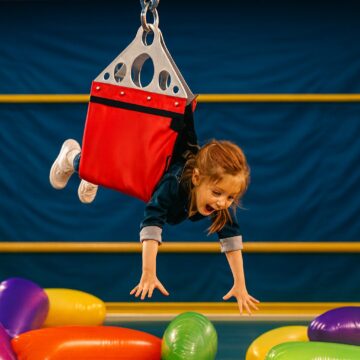
(1) Human Claw Machines
Players wear safety gear and are hoisted above the prize pit, literally becoming the “claw” themselves to grab prizes.
Extremely immersive and exciting; ideal for major events, mall campaigns and brand roadshows.
Used more as an interactive installation and event prop than as a high-turnover daily machine.
(2) Prize-Dispensing / Hybrid Machines
Inside the machine you’ll find not only plush toys, but also drinks, snacks, candy, small appliances, gift boxes, coupons and more.
Often used for promotions, collaborations and member activities, turning “clawing” into a fun way to distribute gifts or run campaigns.
(3) Themed Display / Scene Machines
Cabinets are designed as IP houses, mini parks or character scenes – the machine itself is a “display piece.”
Prizes are strongly tied to the theme (matching plush, figurines, merch) and are perfect for photo opportunities.
These special types focus more on buzz and marketing value, and are ideal for venues with event budgets and a need to grab attention.
II. Advanced Claw Machine Categories: Match Types to Scenarios, Tech and Prizes
With the “skeleton” in place, we can look at three more practical dimensions:
Usage scenario and purpose
Technology, payment and intelligence
Prize type and trend
1. By Scenario & Purpose
(1) Home Entertainment / Light-Spending Scenarios
Typical venues: Community supermarkets, family restaurants, kids’ areas, convenience stores.
Recommended machines: Mini or small claw machines + classic three-prong claws + fixed strength or gentle probability settings.
Prize suggestions: Cute plush toys, small stationery and mini toys – the focus is on “taking home a little gift.”
(2) Commercial Traffic-Attraction / High-Foot-Traffic Scenarios
Typical venues: Mall corridors, cinema halls, large shopping centers, car dealerships, big retail entrances.
Recommended machines: Standard / medium machines as the main group, with a few large machines as visual centerpieces.
Prize suggestions: Popular plush, IP plush, simple art toys and branded giveaways.
(3) Social / “Instagrammable” Scenarios
Typical venues: Trendy streets, theme parks, night markets, bars, lifestyle cafés, fashion boutiques.
Recommended machines: Standard + skill-based + special-structure machines (cut-rope, pushers, human claw, etc.).
Prize suggestions: Blind boxes, art toys, collaboration merch and highly photogenic prizes that people want to share online.
(4) Competitive / High-Engagement Scenarios
Typical venues: Professional arcades, gaming complexes, player clubs.
Recommended machines: High-skill UFO-style machines, fixed-strength skill machines and complex mechanism machines.
Prize suggestions: Digital accessories, limited figurines and high-value collectibles that are “hard but worth it.”
2. By Technology, Payment & Intelligence
(1) Traditional Coin-Operated Machines
Use coins or tokens – simple and straightforward, easy to maintain.
Suitable for classic arcades, older malls or areas where mobile payment isn’t widespread.
(2) QR / Card-Payment Machines
Support QR codes, IC cards and membership cards.
Can be combined with member points, multi-play bundles and promotional campaigns.
(3) Networked / Smart Machines
Connected to a backend system – operators can remotely view data, adjust difficulty and check revenue.
Some integrate with apps or mini-programs, even offering “online claw” experiences.
Ideal for chain operations and unified management across multiple locations.
(4) Interactive Multimedia Machines
Equipped with large screens, animations, stories or mini tasks – players may complete a small interaction before clawing.
Great for building themed zones and increasing dwell time and engagement.
3. By Prize Type & Trends
Prizes are the most direct motivation for players and heavily influence how attractive a machine looks and how shareable it is.
(1) Traditional Plush / Stuffed Toys
Easy to control cost; cute appearance; a good fit for families and kids.
Works well for most mini and standard machines.
(2) Blind Boxes / Designer Toys / IP Merch
Strong collecting and social value; ideal for young people, anime fans and trend lovers.
Higher unit price; best combined with skill machines or larger cabinets, with carefully designed payout rates.
(3) Snacks / Drinks / Everyday Items
Ready to use or consume; pair naturally with supermarkets, convenience stores and F&B venues.
Well-suited to prize-dispensing and hybrid machines.
(4) Digital Gadgets / Gift Cards / Vouchers
Effective as grand prizes or event rewards and tie in nicely with the venue’s main business (for example, claw a coupon and redeem it in-store).
Great for operators who want to turn claw machines into promotional tools, not just standalone games.
III. Player Guide: How to Choose Claw Machines and Enjoy the Game
This section is for players who want to have fun, win more often and avoid feeling cheated.
1. Beginners: Start with Friendly Machines
Look for standard or mini machines + classic three-prong claws + plush prizes.
Avoid very complex cabinets, chaotic prize piles or unusual mechanisms (unless you’re deliberately seeking a challenge).
Watch for a few minutes:
What’s the success rate of other players?
When the claw grabs something, does it actually hold it, or drop it right away?
2. Want a Challenge? Choose Fixed-Strength or Skill-Based Machines
Machines whose claw strength looks stable, with neatly arranged prizes and players who keep trying, are usually more skill-oriented.
They’re ideal if you enjoy analyzing angles, balance and timing.
Set a clear budget – for example, “I’ll only spend this $10 on this machine today” – so even if you don’t win, it won’t hurt too much.
3. Treat Claw Machines as Fun, Not Gambling
Many machines are configured with payout control; nobody can win every time, even with perfect skill.
Think of it as a small break while shopping:
If you win, it’s a nice surprise.
If you don’t, you’ve still bought a few minutes of laughter with friends or family.
4. Be Smart About Prize Selection
Prefer prizes that are near the chute, not tightly wedged in, with a higher or easier-to-grab center of gravity.
Items buried deep, crushed under piles or clearly stuck are hard to win, no matter how good the machine is.
IV. Operator Guide: Turn Claw Machines into Real Revenue
This section is for shop owners and operators who want claw machines to truly support their business.
1. Clarify Your Main Scenario and Target Customers
Small shops / milk tea / convenience stores:
Mini machines + plush or small gifts → low-cost testing.Malls / cinemas / complexes:
Standard machines as the core + a few large machines as centerpieces.Trendy stores / play centers / night markets:
A mix of standard, skill-based and special machines, focusing on buzz and experience.
Once your scenario is clear, you can choose size, claw type and mechanics with purpose, rather than randomly.
2. Balance Prize Cost, Difficulty and Revenue
Expensive prizes + high payout rate → hard to make profit.
Cheap-looking prizes + ultra-low payout rate → players won’t come back.
Usually you’ll tune claw strength and pricing by looking at:
Prize cost
Desired margin
Expected play price and payout rate
3. Treat Claw Machines as a Long-Term Project
Monitor data: daily plays, prizes dispensed, average play time.
Refresh content: regularly rotate prizes and themes to keep regular players interested.
Adjust placement: try different spots to see where traffic and conversions are best.
4. Link Claw Machines with Your Core Business
F&B + claw machines: let players win drink vouchers or snack coupons to encourage repeat visits.
Retail + claw machines: use product samples or gift cards as prizes to boost repurchases.
Entertainment / kids’ venues + claw machines: offer passes and experience coupons to keep families coming back.
Conclusion: Decide What You Want the Machine to Do, Then Choose the Type
By now, you’ve seen more angles than most people who choose claw machines just by looks:
You know the differences between size, claw design, gameplay mechanics and special types.
You know different venues, audiences and prize strategies call for different machine combinations.
As a player, you can choose more wisely and control your spending.
As an operator, you can treat claw machines as real business tools rather than expensive decorations.
Next, compare your own venue and budget with the dimensions in this guide:
What scenario is my location? Who are my main customers? Do I want the machine to earn money, drive traffic or build atmosphere?
Once you can answer those questions, you’ll naturally see:
Which type of claw machine is truly right for you.


 English
  Español
  العربية
  Français